


You’ll receive a clear, exact price before any work begins.
If your repair fails during the current season, we’ll come back and fix it at no additional cost.
We treat your home with care and ensure your property is fully protected while we work.
A ceiling fan that is properly sized, correctly installed, and matched to the room it serves makes a real difference in how comfortable your home feels all year long. Mrs. Michael installs ceiling fans for Howell homeowners who want the job done right without the hassle of figuring out the wiring themselves.
Our Services:
- Ceiling Fan Installation
- Circuit Breaker Installation & Replacement
- Electrical Code Compliance
- Electrical Panel Upgrade & Replacement
- Electrical Repair
- Electrician
- EV Charger Installation
- GFCI Outlet Installation & Replacement
- Hot Tub & Pool Wiring
- Indoor Lighting Installation
- Outdoor & Landscape Lighting Installation
- Whole Home Generator Installation & Repair
Contact Us
What Your Neighbors Are Saying About Us
Ceiling Fan Styles, Sizes and Features to Consider
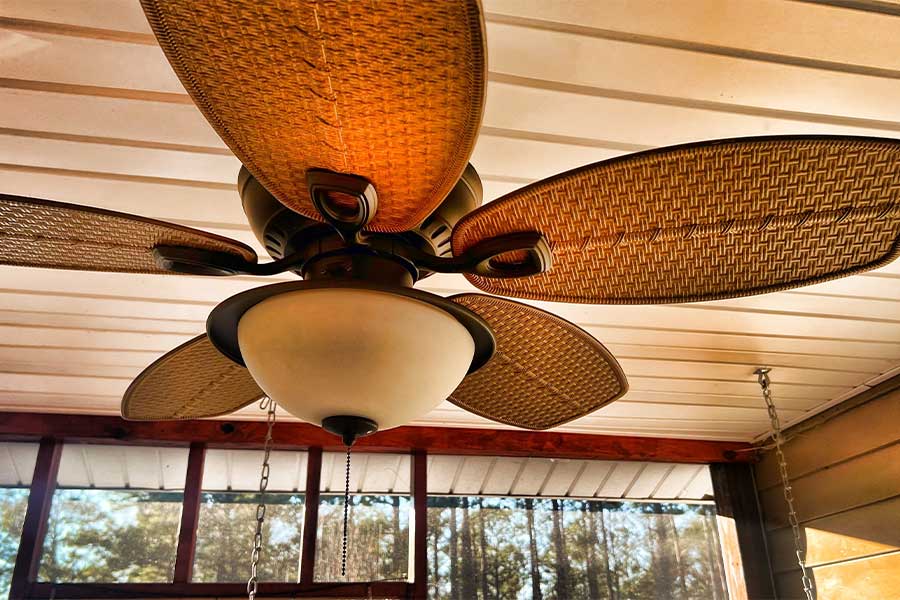
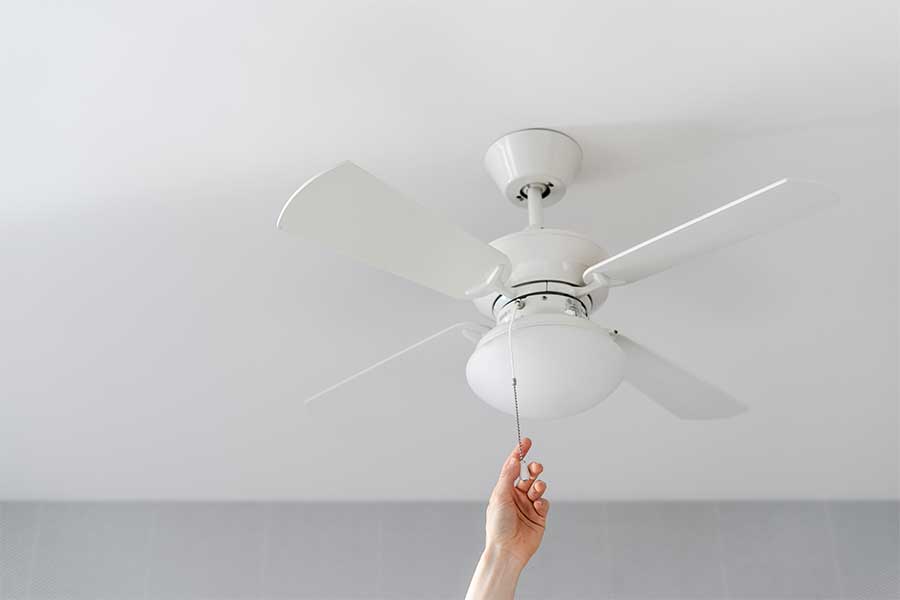
Ceiling fans come in a wide range of styles, sizes, and feature sets, and choosing the right one for the room matters more than most people realize before they make a purchase.
Blade span is the most important starting point. A fan that is too small for the room it serves will not move enough air to make a noticeable difference, while an oversized fan in a smaller room creates an uncomfortable, overpowering airflow. Rooms up to 75 square feet pair well with fans in the 29 to 36-inch range, while larger living rooms and primary bedrooms typically call for fans between 52 and 60 inches. For great rooms, open floor plans, or commercial spaces, fans in the 60-inch-and-up category are the right fit. Ceiling height is the other major factor, since low-profile flush mount fans are the right choice for standard eight-foot ceilings, while rooms with higher ceilings benefit from fans mounted on a downrod that positions the blades at the optimal height for air circulation. Features like integrated lighting, remote controls, smart home compatibility, and DC motors for quieter, more efficient operation are all worth considering based on how you plan to use the fan and where it will be installed.
How Ceiling Fans Improve Comfort and Energy Efficiency
A ceiling fan does not actually change the temperature of the air in a room, but it changes how that air feels on your skin in a way that translates directly into energy savings.
The wind chill effect created by a moving fan allows you to set your thermostat a few degrees higher in summer without sacrificing comfort, which reduces how hard your air conditioner has to work during Howell’s humid July and August stretches. In winter, reversing the fan direction to clockwise at a low speed pushes the warm air that collects near the ceiling back down into the living space, which makes your heating system more efficient by distributing heat more evenly throughout the room. That effect is particularly noticeable in rooms with higher ceilings where warm air can pool well above where people actually spend their time. For Howell homeowners running both air conditioning in summer and heating systems through long winters, the cumulative energy savings from running ceiling fans throughout the year adds up to a meaningful reduction in monthly utility costs.
Our Ceiling Fan Installation Services
Whether you are installing a fan where no fixture currently exists or replacing an outdated one, Mrs. Michael handles the full job from start to finish.
Our services cover new ceiling fan installation in rooms with existing light fixture wiring, installation in rooms without any existing overhead electrical, ceiling fan replacement and upgrade, downrod selection and installation for high-ceiling applications, installation of fans with integrated lighting and remote or smart controls, and replacement of standard electrical boxes with fan-rated boxes when needed to properly support the fan’s weight and movement. We bring the expertise to make sure every fan we install is secure, balanced, and wired correctly before we leave.


Ceiling Fan Wiring and Electrical Requirements
Ceiling fan installation looks straightforward on the surface but involves electrical requirements that are easy to get wrong without the right knowledge.
The electrical box that supports a ceiling fan must be rated specifically for fan use, since fans create dynamic load from movement and vibration that a standard light fixture box is not designed to handle. Installing a ceiling fan on a non-rated box is one of the most common DIY mistakes we see, and it can result in the fan pulling loose from the ceiling over time. Rooms without existing overhead wiring require a new circuit run from the panel, which involves opening walls or ceiling to route the wiring correctly. Fans with separate controls for the fan motor and the light kit require a specific wiring configuration, and smart fans with Wi-Fi or remote control capability have their own wiring and compatibility requirements that vary by model. We assess your room’s existing wiring and ceiling box before any installation begins so every detail is handled correctly.

Why Choose Mrs. Michael for Ceiling Fan Installation
A ceiling fan installed correctly runs quietly, stays secure, and lasts for years without problems. Here is why Howell homeowners trust Mrs. Michael with the job.
- Upfront, exact pricing before any work begins
- Fan-rated box assessment and replacement included when needed
- Property protection guarantee on every job
- Same-day availability for straightforward installations
- Wiring assessment before installation starts
- Honest recommendations if a room’s electrical needs additional work
Frequently Asked Questions
Can you install a ceiling fan where only a light fixture currently exists?
In most cases, yes, provided the existing wiring supports the fan’s requirements and the electrical box is fan-rated or can be replaced with one. We assess the existing setup before installation and let you know if anything needs to be addressed.
How do I know what size ceiling fan I need?
Blade span should be matched to the room’s square footage and ceiling height. We help you choose the right size before installation so the fan is actually effective for the space rather than decorative but underperforming.
Do ceiling fans really help in winter?
Yes. Running the fan in reverse at low speed pushes warm air that collects near the ceiling back down into the living space. In rooms with higher ceilings, this makes a noticeable difference in how evenly the room heats and how hard your furnace has to work to maintain a comfortable temperature.
Can you install a ceiling fan in a room with no existing overhead light or wiring?
Yes. We run the necessary wiring from your panel to the new fan location. The complexity and cost depend on your ceiling type, attic access, and how the circuit needs to be routed, and we give you a clear price before any work begins.
Why is my existing ceiling fan wobbling or making noise?
Wobbling is usually caused by unbalanced blades, loose blade brackets, or a fan mounted on a box that is not properly secured. Noise during operation can point to loose hardware, a failing motor, or a fan that is simply too large or running too fast for the mounting conditions. We diagnose the cause and let you know whether repair or replacement makes more sense.